Showing posts with label Teknologi. Show all posts

RAHSIA Servis Laptop

Apabila kita membeli laptop, setiap penjual akan memberitahu tentang kelebihan setiap laptop yang dijual. Spesifikasi, kelajuan processor, memori yang pantas, kapasiti cakera keras yang besar, pemproses grafik yang boleh menjana visual realistik, saiz paparan skrin dan lain-lain lagi ciri-ciri yang digunakan sebagai poin jualan.

Namun begity, hampir tiada seorang pun daripada penjual laptop ini akan memberitahu anda bagaimana hendak menjaga laptop dengan betul. Baru tersedar bukan?

Jom kita berkongsi rahsia yang semua kedai komputer tak ingin anda tahu berkenaan servis laptop. At least anda boleh buat sesuatu.

Cuci Kipas laptop dan tukar ‘thermal paste’ baru setiap 6 bulan.
  • 80% dari laptop yang rosak adalah disebabkan masalah motherboard
  • 7% dari masalah motherboard berpunca dari kecuaian manusia seperti tertumpah cecair dan terjatuh
  • 93% dari kerosakan motherboard  ini berpunca dari tidak servis laptop

Apa Itu Servis Laptop?
Servis laptop adalah dimana laptop akan dibuka dan habuk yang berkumpul di kipas laptop akan dibersihkan. Thermal paste baru akan digantikan

Mengapa Ia Perlu Dilakukan?

Sama seperti kereta, laptop mempunyai komponen yang bergerak, komponen yang bergerak memerlukan sistem penyejukan. Komponen seperti processor dan pemproses grafik menjana haba yang tinggi. Kipas yang menjadi sistem penyejukan, lama kelamaan akan memerangkap habuk.

Apabila habuk-habuk ini berkumpul, sistem menjadi tidak efisien kerana ianya menghalang udara panas dari keluar. Apabila ianya tidak efisien, komponen penting seperti processor dan pemproses grafik ini akan rosak kerana terlebih panas (overheating).

Apabila ini berlaku, kos membaikinya lebih kurang membeli laptop baru. Sebagai contoh kos untuk tukar motherboard brand Acer sahaja mencecah RM700 manakala untuk motherboard Apple Macbook Pro adalah RM2000.

Apakah Thermal Paste?

Thermal paste adalah selapis bahan yang mengalirkan haba sangat baik yang letaknya diantara komponen panas dan sistem penyejukan. Lama kelamaan, thermal paste akan keras dan tidak mengalirkan haba dengan baik. Tujuan servis laptop ini adalah untuk menjamin sistem penyejukan yang efisien dan optimum sepanjang masa.

Bila Waktu Sesuai Servis Laptop?

Anda dinasihatkan untuk servis laptop anda setiap 6 bulan sekali. Jika anda merasakan laptop anda cepat panas, contohnya jika anda boleh rasakan haba di tapak tangan anda ketika menggunakan laptop, segeralah hantar ke kedai komputer berhampiran untuk diservis.

Kesimpulan

  • Servis laptop adalah langkah pertama untuk memanjangkan usia laptop anda.
  • Haba adalah musuh utama laptop.
  • Pastikan anda servis laptop anda sekurang kurangnya 6 bulan sekali.
  • Hantar laptop pada yang pakar sahaja.
Sumber: MajalahNiaga

Pekebun cipta Lamborghini Jr.

Assalamualaikum dan selamat tengah hari


Ini kisah anak kepada Lamborghini..a.k.a Lamo Jr.

Guo (50s), seorang petani di Zhengzhou, WIlayah Henan China telah mencipta sebuah kereta replika Lamborghini. Beliau telah menghabiskan masa selama 6 bulan dan membelanjakan sekurang-kurangnya 5,000 yuan (RM2700) untuk menghasilkan kereta mini tersebut yang berukuran 2-meter-panjang, 1 meter-lebar. Beliau menyatakan bahawa "Lamborghini" tersebut merupakan hadiah untuk cucunya. Replika tersebut diperbuat daripada logam dan bahagian-bahagian dari basikal elektrik, dilengkapi dengan horn, stereo dan 5 set bateri dan boleh melakukan perjalanan sejauh 37 batu apabila dicas sepenuhnya.


Sumber: Yahoo News


SmartTag Murah Sempena Raya RM99

Assalamualaikum & selamat sejahtera.

Touch 'n Go buat promosi Smart Tag dengan harga RM99/unit mulai 15 Ogos 2012 (Rabu) dan seterusnya sampai abis. Harga biasa RM120. Dia limit untuk 2 unit/pelanggan. Just 20,000 unit sahaja.  So cepat2 ke Touch n Go hub atau Touch n Go SPOT yang berdekatan. Bagi yang duduk Shah Alam, korang boleh beli dekat Petronas yang sebelah federal highway tuh. Isi borang sket pastu bayar. Siap!


Masa pergi beli tadi, takde la ramai sangat so ok la. Kalau time petang2 macam ni tak sure lah. Untuk maklumat lanjut korang boleh layari laman web Touch n Go Promosi raya nih. Kalau nak check Touch n Go Hub/ Spot yang berhampiran korang, boleh layari laman web ni. 

p/s: 1st time tuh pakai SmartTag. hahaha ;P

Kita semua berisiko!! CTS

Assalamualaikum & selamat sejahtera.

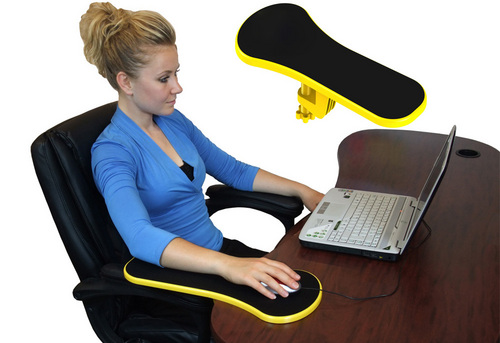
Hari ni macam terdetik pulak nak cakap pasal sindrom carpal tunnel. Sebelum tu just nak tanya. Korang penah tak rasa kebas ke? Rasa sakit2 atau lenguh2 terutamanya pada bahagian pergelangan tangan lepas online FB 4 jam, lepas gayut telefon lama2? Kalau ada, sila beri perhatian ok ;)

Sindrom ni jadi bila saraf median dekat pergelangan tangan kita tersepit. Benda ni sebab terowong yang ada kat bahagian tapak tangan sendi pergelangan tangan kita jadi semakin sempit.


Gambar ni munkin lebih jelas kot. Korang nampak kan median nerve tu? Saraf tu la yang tersepit.


Terowong tu dia bagi laluan dan perlindungan untuk saraf median. Tekanan pada saraf median ini akan menyebabkannya sarat ni tak berfungsi dengan baik, seterusnya melemahkan bahagian tangan.

Simptom dia start slow2. Biasanya rasa sakit start kat bahagian pergelangan tangan dan boleh melarat ke bahagian tangan dan lengan. Bahaya kan?

Simptom:
  1. Kebas - pada bahagian tangan dan jari-jari tangan terutamanya ibu jari, jari telunjuk, jari hantu dan jari manis tetapi tidak pula berlaku pada jari kecil.
  2. Sakit - pada sendi pergelangan tangan sehingga ke lengan atas, bahu atau ke tapak tangan dan jari, terutamanya selepas menggunakan tangan secara berterusan atau menggunakan tangan dengan kuat.
  3. Lemah - tangan rasa lemah even boleh menyebabkan objek yang korang pegang jatuh. 
So kalau korang biasa goyang2kan tangan/pergelangan tangan lepas buat kerja, mungkin itu salah satu simptom sindrom ni.
Perngguna komputer tegar seperti blogger, geng2 IT turut dikaitkan dengan Sindrom Carpal Tunnel. Kalau korang punya pekerjaan yang banyak melibatkan penggunaan tangan atau pergelangan tangan secara berlebihan, berulang-ulang dan dengan kuat. Punca tekanan pada saraf median ini tidak dapat dipastikan dengan tepat, tetapi ia mungkin disebabkan oleh beberapa faktor seperti:

Kaedah rawatan

Bagi yang tak teruk sangat, korang boleh kurangkan rasa sakit dan kebas dengan mengambil langkah paling mudah dalam muka bumi ni iaitu rehatkan tangan tu. Ada juga kaedah rawatan lain yang melibatkan pembedahan atau tanpa bedah (non-surgical).

Maklumat ni mungkin boleh membantu terutamanya bagi golongan yang suka mengadap depan laptop/PC lama2.


Untuk maklumat lanjut, boleh layari Athritis Foundation Malaysia dan sumber Sindrom Carpal Tunnel

p/s: rasanya kena buat exercise pergelangan tangan sebelum buat kerja lah ;P

1st time landing di Marikh

Assalamualaikum & Slamat sejahtre.

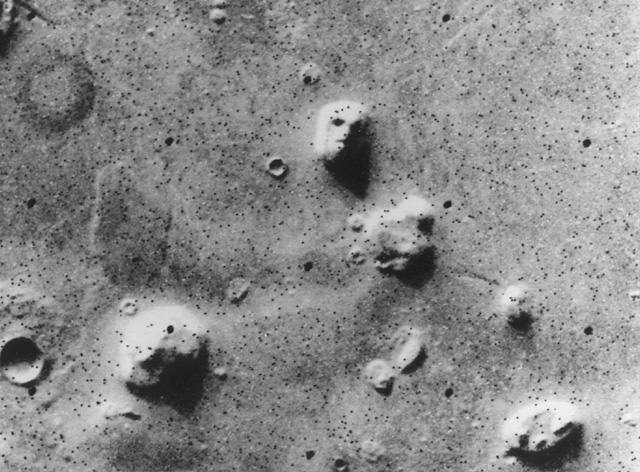
Berikut merupakah 'foot step' pertama dalam sejarah oleh kenderaan ekspidisi NASA ke Planet Marikh pada 5th Ogos 2012 yang lalu.


NASA memang dari dulu teringin sangat nak jadikan marikh sebagai penempatan manusia jika bumi dah tak selamat. So macam2 kajian yang mereka buat. Dan kita pun dah sedia maklum yang sangat banyak kontroversi berkaitan planet merah ni. Salah satunya pasal isu permukaan planet marikh ada macam muka orang. National Geographic News pula mengatakan kebarangkalian wujudnya kehidupan di marikh ada namun kajian sainstific perlu dipergiatkan lagi.


Allah dah tentukan bumi sebagai tempat untuk manusia jadikan tempat tinggal bukan marikh. Kenapa? Wallahualam. Hanya Allah sahaja yang lebih mengetahui. Walaubagaimanapun, tak mustahil juga wujudnya kehidupan di galaksi lain. Kalau nak di ceritakan bertapa luasnya cakerawala ni, sukar nak di bayangkan. Mungkin ada dan mungkin tiada. Anyway, keep explore and you will find the answer ;)


p/s: Teringat cerita flashman...

Kuala Lumpur’s SMART Tunnel not looking so smart anymore

THE SMART Tunnel is the pride and joy of the authorities who have always touted it as the ultimate solution to the flood problems in Kuala Lumpur. When the project was rushed to be opened in January 2007, we were all told that the floods that hit the city a few months earlier would be the last as the tunnel was the longest and biggest storm drain project in South-East Asia.

True enough, for several years our capital city seemed to have been spared from any deluge despite some heavy downpour. Motorists were irritated when the tunnel had to be closed to accommodate the draining of rainwater to the retention ponds but, generally, city folk were impressed with the workings of the RM1.9bil Storm Water Management and Road Tunnel project - until last Tuesday.

That was the day Jalan Tun Razak, Jalan Semarak and Kampung Baru were flooded just like how it was in 2006, when the worst flood ever hit the city centre. It was as if we were like Bangkok a few weeks ago. What happened to the SMART Tunnel?

A spokesman for SMART had said that had it not been for the SMART Tunnel, KL would have experienced much worse flooding last week.

It also seems that the river that burst its bank was Sungai Bunus. It flows though the Kampung Baru-Jalan Tun Razak-Jalan Semarak area and this waterway was not covered under the SMART Tunnel scope.

So, there is now a need to come up with a flood mitigation project to resolve this “new problem”.

At Monday's Kuala Lumpur City Hall (DBKL) budget meeting, KL Mayor Tan Sri Ahmad Fuad Ismail announced an allocation of RM85mil for flood mitigation works, including RM20mil for the Federal Territory Drainage and Irrigation Department (DID) to divert water from Sg Bunus to Lake Titiwangsa. This, he said, was to help mitigate the recent flooding along Jalan Tun Razak.

Why was this not thought of earlier when billions were being spent on the SMART Tunnel and the other flood mitigation projects implemented over the years? Why is it after a few hours of downpour in 2011 that Sg Bunus has suddenly become a problem?

In fact in 2007 seven projects costing millions were carried out in various flood hot spots in the city.

Some of these “long-term” measures include building floodwater retention ponds, upgrading drainage and diverting water from one river to another. All of these projects were completed and yes, many of them are effective.

Sg Bunus seems like a new problem, one caused by rapid unplanned development.

There have been new projects built along and even over Sg Bunus. Could it be that these developments are the cause of the floods? Instead of just spending millions of ringgit only on flood mitigation projects, the authorities should also carry out studies of how rivers or even storm drains in Kuala Lumpur are impacted by nearby development.

Source: The Star 21.12.2011

Review procedures to prevent gas leak fires

The palm-sized device was made of brass and simple to operate. It looked like the common gas regulator, except that it had a small meter which shows the amount of gas left in the tank.

The metered regulator cost RM90, almost eight times more than the regular ones. I bought one for two reasons -- it had an automatic shutdown feature which cuts off supply from the tank if there were a leak and lets me know how much gas is left so that I know when to order a new tank.

I hated having to keep a spare tank at home all the time. My fear of a gas leak was as great as running out of gas halfway through cooking my favourite bak kut teh.

But it was a necessary nightmare, before I stumbled upon the metered regulator.

I was even more impressed when the salesman told me that the metered regulator came with a RM1 million liability-insurance and was guaranteed to last five years.

Mine lasted me nine years but, when I went looking for a new one, I was told that it was no longer produced. Apparently, the price was too high for its time and the company had folded.

Last week, when I read that a blast had damaged a restaurant on the ground floor at Maju Junction, my thoughts went back to the metered regulator and gas safety. The blast is the second, involving a food outlet, which is believed to be due to a gas leak.

On Sept 28, the Empire Shopping Gallery in Subang Jaya made the headlines when a gas explosion destroyed a restaurant and injured four people.

The complex has since reopened and, according to reports, eateries there have been fitted with a brand new gas line, backed up by a state-of-the-art gas sensor that runs round-the-clock.

Although no one was hurt in the latest blast, I think the authorities should review current procedures for ensuring the safety of the eateries operating in enclosed premises, especially those that see high pedestrian traffic.

Are regular safety inspections, not just health checks, carried out at such eateries before their business licenses are renewed annually?

In case of a fire, especially at eateries in the older shopping complexes, are the kitchen areas shielded to protect people -- at least for the duration needed to evacuate everyone?

Apart from regular smoke detectors and sprinklers, should all eateries in old shopping complexes be equipped with gas leak detection systems?

It also gives me the jitters when I see fast-food outlets operating within a shouting distance of petrol stations.

There is no telling what can happen if an eatery near an underground petrol bunker catches fire, as a result of human carelessness or a faulty stove.

Source: Estung, NST

Smartphone addicts starting to feel the pain

Users of smartphones and tablet computers are starting to get high-tech blues, as increasing numbers of the tech savvy are coming down with ailments from "text neck" to "text thumb injury".

Health experts in Britain have warned that strain injuries stemming from long periods spent staring at small screens and tapping at tiny keys can be debilitating. And such injuries are becoming more common as high-tech gadgets grow ever more popular.

Increasing numbers of Britons use their smartphones for accessing the Internet rather than making phone calls.

According to a recent YouGov poll of over 2,000 people, 44 percent of Britons use their mobile phone for activities other than making calls, for between 30 minutes and two hours a day.

"I had a patient who developed inflamed tendons in her thumb from using her smartphone and was unable to use her hand for weeks due to pain," said Tim Hutchful from the British Chiropractic Association.

Sammy Margo of the Chartered Society of Physiotherapy said that people's bodies are "not designed to be used like this".

"The phones are far too small, with keys that are too small," she said, noting that pain in the upper limbs forced one of her patients to stop texting and instead switch to voice recognition software.

As well as hand injuries, experts point to problems among smartphone and tablet users arising from hours spent leaning over tiny screens.

"The weight of an average human head is between 10 to 12 pounds (4.5 to 5.5 kilogrammes)," said Hutchful.

In an ideal posture, where a vertical line can be drawn from your ear through your shoulder, hip, knee and ankle, "the weight is carried efficiently", he noted..

But if the head is constantly held forward to squint at a screen, then the unusual posture makes the head feel up to four times heavier, increasing strain across the whole body, he explained.

"Text neck" is in effect the latest manifestation of "repetitive strain injury" (RSI), a condition which affects one worker in 50 in Britain.

RSI includes a number of ailments affecting the muscles, tendons and nerves, primarily in the neck and upper limbs. It is particularly prevalent among workers who spend long periods using computers.

It is a treatable condition, but experts warn it is essential not to ignore the early warning signs.

In France, RSI is the main cause of sick leave in the work place. Emmanuelle Rivoal, a Paris-based physiotherapist and osteopath, is seeing an increasing number of patients who are paralysed by pain "because they spend more than five hours a day in front of a screen."

While stressing that he did not want to "demonise smartphones", Hutchful offered some pointers for gadget aficionados to avoid injury, such as using a smartphone for no more than 40 minutes at a time.

"Keep use to a minimum, take regular breaks and look at different ways of interacting," such as voice recognition software for texting, he said.

Margo said the biggest at-risk group are children and teenagers, who are heavy users of computers and smartphones.

"I know families where people communicate from one room to another via text messages," she said. "We have to put limits on this."

Source: Marie-Pierre Ferey | AFP News – Fri, Dec 2, 2011

5-year-old falls off S’pore flyer platform

A five-year-old boy veered off a platform and fell into a safety net at the Singapore Flyer last Sunday evening, after his father lost grip of the stroller the boy was seated in.

The New Paper (TNP) reported that the boy’s father, known as Mr Tan, had just disembarked from a capsule after the 30-minute ferris wheel ride when he accidentally let go of his son’s stroller.

According to Singapore Flyer centre manager Thiru Ramayah, who spoke to the same paper, the stroller rolled down the disembarkation platform, which is sloped, and slipped off it, falling about half a metre into a safety net below.

After hearing a shout for “code red”, Ramayah saw what had happened in his closed-circuit television monitor from the Flyer’s command centre, and rushed out to ensure that the five-year-old was unharmed.

“The boy appeared to have been tipped out of his stroller and trapped under it,” said Ramayah to TNP, adding that three technicians lowered a rescue ladder to the safety net to help the boy up.

Senior technician Glenn Villaflores told the paper that the boy was “crying non-stop” and seemed very afraid.

“Everything happened very quickly,” said the 28-year-old. “We were very focused on getting the child to safety.”

Ramayah added that Mr and Mrs Tan seemed equally traumatised by what had happened, saying that Mrs Tan was also sobbing. The family was led to a quiet area to calm down after the crew had rescued the five-year-old.

“We offered them water, and one of my staff members even bought stuffed animals from the gift shop for the boy and his younger sister to try to calm them down,” he said.

The Flyer was halted for four minutes as the rescue effort took place, and Ramayah said there was no need for an announcement to be made because it was over so quickly.

A spokesperson for the Flyer told Yahoo! Singapore that the safety net installed below the wheel can support loads of up to 300kg.

She also said that members of staff are stationed along the boarding and disembarkation decks, as well as in a control room, to ensure that guests are looked after at all times.

“This ensures that staff members on ground are able to react quickly to any emergency,” she said.

Railings are also installed along the boarding and disembarkation decks, and staff members stationed right beside the capsule entry and exit points to usher guests safely, added the spokesperson.

“The Singapore Flyer takes the safety of our guests very seriously and we hope that our guests will also exercise caution and responsibility to ensure their safety,” she said.

Source: Jeanette Tan (Yahoo News)

Gumby-like flexible robot from Havard

LOS ANGELES (AP) — Harvard scientists have built a new type of flexible robot that is limber enough to wiggle and worm through tight spaces.

It's the latest prototype in the growing field of soft-bodied robots. Researchers are increasingly drawing inspiration from nature to create machines that are more bendable and versatile than those made of metal.

The Harvard team, led by chemist George M. Whitesides, borrowed from squids, starfish and other animals without hard skeletons to fashion a small, four-legged rubber robot that calls to mind the clay animation character Gumby.

In recent years, scientists have been tinkering with squishy — sometimes odd-looking — robots designed to squeeze through hard-to-reach cracks after a disaster like an earthquake or navigate rough terrain in the battlefield.

"The unique ability for soft robots to deform allows them to go places that traditional rigid-body robots cannot," Matthew Walter, a roboticist at the Massachusetts Institute of Technology, said in an email.

A team from Tufts University earlier this year showed off a 4-inch (10-centimeter) caterpillar-shaped robot made of silicone rubber that can curl into a ball and propel itself forward.

The Harvard project, funded by the Pentagon's research arm, was described online Monday in the journal Proceedings of the National Academy of Sciences.

The new robot, which took two months to construct, is 5 inches (12.7 centimeters) long. Its four legs can be separately controlled by pumping air into the limbs, either manually or via computer. This gives the robot a range of motions including crawling and slithering.

The researchers tested the robot's flexibility by having it squirm underneath a pane of glass just three-quarters of an inch from the surface.

Scientists maneuvered the robot through the tiny gap 15 times using a combination of movements. In most cases, it took less than a minute to get from side to side.

Researchers eventually want to improve the robot's speed, but were pleased that it did not break from constant inflation and deflation.

"It was tough enough to survive," said Harvard postdoctoral fellow Robert Shepherd, adding that the robot can traverse on a variety of surfaces including felt cloth, gravel, mud and even Jell-O.

There were drawbacks. The robot is tethered to an external power source and scientists need to find a way to integrate the source before it can be deployed in the real world.

"There are many challenges to actively moving soft robots and no easy solutions," Tufts neurobiologist Barry Trimmer, who worked on the caterpillar robot, said in an email.

Robotics researcher Carmel Majidi, who heads the Soft Machines Lab at Carnegie Mellon University, said the latest robot is innovative even as it builds on previous work.

"It's a simple concept, but they're getting lifelike biological motions," he said.

Source: ALICIA CHANG, AP Science Writer

Screening tests not perfect

It turns out that catching cancer early is not always as important as has been thought. Some tumours are too slow-growing to ever threaten your life. Some are so aggressive that finding them early does not make much difference.

And today’s treatments are much better for those somewhere in the middle.

“We can find cancer early. We can reduce the burden of the disease. But along the way, we’re learning our tests are not as perfect as we’d like,” says the American Cancer Society’s Dr Len Lichtenfeld, a longtime screening proponent.

Forum on vaginal discharge

Damai Service Hospital (Melawati) will be holding a public forum on vaginal discharge by Dr Zunita Abdul Hamid at ground floor, lobby area, Damai Service Hospital (Melawati), Lot 9132-9134, Jalan Bandar 4, Taman Melawati, Kuala Lumpur on Saturday.

Call Dayang or Vicky at 03-4108 9900 for more information. Admission is free.

Source: Compiled by Syida LizTa Amirul ihsan

Lynas installs RM1.5mil air quality monitoring system

KUANTAN: Lynas Malaysia Sdn Bhd has installed an Airborne Monitoring System (AMS) at its site in Gebeng while a second unit will be placed in Kuantan town next month.

Its managing director Datuk Mashal Ahmad said the units, which would provide updates on air quality every 10 minutes, cost RM1.5mil and were operated by the Atomic Energy Licensing Board (AELB).

“With the AMS, people will know that whatever radiation emitted is very low, negligible and harmless to humans and the environment.

“The readings are also accessible online,” he said during a briefing on the rare earth plant's progress here yesterday.

Also present were general manager (plant) Khairul Salleh Jais, engineering services senior manager Wee Tait Eng and Lynas Malaysia's radiological safety adviser Prof Dr Ismail Bahari.

Mashal also commented on the 11 recommendations imposed by the International Atomic Energy Agency (IAEA) review team, including three that need to be fulfilled before the pre-operation licence, which is for a two-year period before actual production could begin.

“We have given all the facts and data, and a permit to operate will make it possible to prove that the statistics are right,” he said, adding that the plant would be completed in January.

Mashal also denied that Lynas would start shipping rare earth from Australia.

He added that an empty container was brought in to map out the logistics involved.

On the ongoing protests against the plant, Mashal said Lynas welcomed any form of dialogue.

“They need to understand the processes involved and listen to the right people with the right expertise.

“Also, they must not impose conditions such as bringing along their lawyers or wanting to take photos and video recordings in the plant,” he added.

Source: ROSLINA MOHAMAD
roslina@thestar.com.my

Putrajaya a model green city

In a world where the weather is wreaking havoc and animals such as the Western Black Rhinoceros/West African Black Rhinoceros have recently been declared extinct, sustainable development has become imperative.

Putrajaya is a shining example of a modern Malaysian city that has embraced sustainable development and green technology, said Putrajaya Holdings chief executive officer Datuk Azlan Abdul Karim at a symposium at the Pullman Putrajaya Lakeside Hotel recently.

He said the township was intended to be an eco-friendly, modern city from its inception and would continue to adhere to the principles of sustainable development.

"We look forward to developing green buildings in the coming development phases as well as equipping the premises with renewable energy. We hope to be recognised as Malaysia's first green city," he said.

"Sustainable development is not limited to concerns about direct and obvious negative impacts on the environment but also the creation of sustainable, connected communities.

"It is in this spirit that Putrajaya develops its residential, commercial and recreational spaces."

Azlan said this at the symposium on "Experiential Learning For Sustainable Development" organised by Putrajaya Holdings and Universiti Teknologi Mara (UiTM).

He said Putrajaya was already gearing up to achieve its 30:70 target ratio for traffic and parking facilities.

He said there were about 80,000 residents in Putrajaya.

Azlan said the city would maintain a 30 per cent designated space for parks and landscape even when its population density reached the maximum target of 350,000 residents and 500,000 working population.

"The jewel in the crown of the city's greenery is the 170ha Putrajaya Wetlands.

"It is deemed to be the world's largest man-made freshwater wetlands in the tropics.

"It helps to promote nature conservation, especially of endangered flora and fauna," he said.

Azlan said it was Putrajaya Holdings' strong belief in the values and importance of sustainable development that made it collaborate with UiTM to host the event.

"We see no better way than to invest our resources in thought-provoking programmes such as this, that allow an exchange of ideas between industry professionals and innovators," he added.

More than 160 participants took part in the symposium.

It was launched by Federal Territories and Urban Wellbeing Ministry secretary-general Datuk Ahmad Phesal Talib, who represented the Minister, Datuk Raja Nong Chik Raja Zainal Abidin.

Associate Professor Dr Masran Saruwono, the dean of UiTM's faculty of architecture, planning and surveying, spoke on behalf of UiTm vice-chancellor Datuk Professor Dr Sahol Hamid Abu Bakar.

He said he hoped that Putrajaya Holdings' efforts to revitalise the green agenda in the realm of the built environment in Malaysia would provide the impetus to drive the national green agenda through the exchange of ideas and the sharing of experiences at the symposium.

Source: NAVEEN MATHEW MENON
streets@nstp.com.my

Trip for public to learn about organic farming

KUALA LUMPUR Centre for Environment, Technology & Development Malaysia (Cetdem) is organising a study visit for the public to an organic farm.

The objective is to raise public awareness on how vegetables are grown organically and what it takes for a farm to be considered organic.

The trip to Titi Eco/Organic Farm Resort in Negri Sembilan is scheduled to take place on Nov 27.

The farm is about 300m above sea level. It is surrounded by green hills and located about 9km from Kuala Kelawang.

It takes about one-and-a-half hours to drive to the farm from KL.

The 11.3ha farm has a 2.4ha area with vegetables, three fishponds, various types of fruit trees, and livestock which include ostriches, chicken and turkey. There is also a food-processing factory.

Cetdem is an independent non-profit organisation which promotes sustainable development.

For details, call Tan at 016-219 5826 or 03-7875 7767.

Vaccination the 'best prevention method'


JOHOR BARU: The resurgence of tuberculosis (TB) in the last 10 years has prompted the authorities to be on a constant watch for the contagious disease.
Symptoms of tuberculosis

In Johor, there has been a steady increase of cases: there were 44.3 per 100,000 people in 2000 and 58.7 per 100,000 people last year who had symptoms related to TB or pulmonary tuberculosis.

The spike in TB cases was enough for the authorities to push the alert button, said Johor deputy health director Dr Fatimah Othman.

She said despite the advent of medical technology, it was difficult to effectively contain TB since it might take months or years for the disease to manifest itself once a person was infected.

Dr Fatimah said the awareness campaign was mostly carried out among the relatives of the patient.

"It is a concern and most cases involved adults aged 20 and above. In Johor, 90 per cent of the patients are locals."

Arresting the disease was not easy as the initial symptoms, such as prolonged fever, coughing, loss of appetite and lethargy, could be mistaken for other ailments.

"At one time, the superstitious would blame the black magic practice of santau for the bloody sputum," said Dr Fatimah.

Vaccination through BCG injections at birth and at 12 years old was currently the best prevention method, she said.

"The injection is given free of charge and the government has covered everyone in the target group," she added.

Source: NST

Mobile phones 'alter human DNA'

Radio waves from mobile phones do harm body cells and damage DNA, a laboratory study has shown.

But the European Union-funded Reflex research did not prove such changes were a risk to human health.

The scientists behind the study, which has not been published in a journal, said more work was needed to see the actual effect of the phones on health.

But the UK National Radiological Protection Board said people should not be worried by the study's findings.

A spokesman said the study had not shown the biological changes led to disease.

He added that even research looking at the effects of radiowaves on cells and DNA did not consistently find evidence of damage.

Around 1.5 billion people around the world use mobile phones.

There is an ongoing debate over their safety, with fears over potential dangers linked to mobile phone masts and the handsets themselves.

But the UK government-commissioned Stewart report in 2000 concluded there was no evidence of harm associated with using mobile phones.

However, the report did recommend a precautionary approach and said children should only use mobile phones in emergencies.

The mobile phone industry maintains there is no scientific evidence of harmful effects from electromagnetic radiation.

'Precautions'

The four-year Reflex study, co-ordinated by the German research group Verum, studied the effects of radiation on animal and human cells in a laboratory.

They found that, after being exposed to electromagnetic fields, the cells showed a significant increase in DNA damage which could not always be repaired by the cell.

Damage was also seen in the next generation of cells. Mutated cells are seen as a possible cause of cancer.

The study, which has not been published in a journal, also reported other harmful effects on cells.

The radiation used in the study was at Specific Absorption Rate (SAR) levels of between 0.3 and 2 watts per kilogram.

The SAR is the rate at which the body absorbs emissions from the phone handset.

Most phones emit radio signals at SAR levels of between 0.5 and 1 W/kg.

Mobile phones cannot be sold to unless they fall within the SAR of 2 watts per kg.

Franz Adlkofer, who led the Reflex study, said people should use landlines, rather than mobiles, wherever possible.

He added: "We don't want to create a panic, but it is good to take precautions."

He said definitive research would take another four to five years.

Other studies have suggested mobile phone radiation may have some effect on the body, such as heating up body tissue and causing headaches and nausea, but no study that could be independently repeated has proved that radiation had permanent harmful effects.

'No conclusions possible'

Dr Zenon Sienkiewicz, principal scientific officer at the UK's National Radiological Protection Board, said: "This research is no reason for people to be worried.

"It is an interesting study, but its conclusions should not be over-emphasised."

He added: "The bottom line is that more research looking at whether mobile phones do have a measurable effect on health is needed."

A spokeswoman for the Mobile Operators Association said: "Independent scientific review bodies in the UK and around the world have consistently concluded that the weight of scientific evidence to date suggests that exposure to radiowaves from mobile phone handsets and base stations operating within international guidelines do not cause adverse health effects.

"The results of this study are preliminary, not yet published or peer-reviewed and require further replication by other groups."

She added: "It is not possible to draw conclusions from this preliminary data.

"The authors of this unpublished study acknowledge that this work will need to be repeated by independent laboratories."

Source: BBC News

No to incinerators for waste disposal?

THE state government is not looking at building incinerators as an option to manage solid waste disposal, said state executive councillor Ronnie Liu.

“The use of incinerators has been linked to health hazards like exposure to dioxin and the maintenance cost is high,” he said.

Liu was responding to Lau Weng San’s (PKR -Kampung Tunku) question on the state government’s strategy in managing solid waste besides using incinerators, as landfills in Selangor would soon reach saturation point.

“The state is always looking at alternative methods to dispose of solid waste properly.

“Our options include material resources facility and mechanical biological technology,” Lui said.

He said environment-friendly technology and cost were factors to consider in solid waste disposal.

Liu added that at this point, the Kajang Municipal Council (MPKj) was the only council that employed a technology to turn waste into reusable energy and compost.

Source: JADE CHAN and CHRISTINA LOW

Malacca plans green city

MALACCA: The state government has announced an ambitious plan to develop a pioneer green city where motorised vehicles would be limited.

Chief Minister Datuk Seri Mohd Ali Rustam told the state legislative assembly that the new city would be named Hang Tuah Jaya Green City.

He said the state would utilise allocation set aside under the Malacca 2012 Budget to spearhead projects at the new city that would be conceptualised after Putrajaya and Cyberjaya.

“The new township will be touted as an icon of green technology for the state,” he said yesterday.

Mohd Ali said the state would outline technical guidelines which would compel developers to register for Green Building Index certification before completing their projects.

They would also be asked to assign a special lane for electric vehicles, bicycle lanes, pedestrian walkways, besides creating a charging station for electric vehicles and building LED or solar-powered street lamps, he added.

Mohd Ali said the physical development at the new city would also include “green” restaurants, a green technology academy, a nursing college, a state health department administration complex, an Internal Revenue Board academy, a medical college and a Socso rehabilitation centre.

“The city will be a benchmark for the future development of similar cities in Malacca,” he added.

To encourage the people to convert to green technology, Mohd Ali said the state would attempt to construct a building using recycled items and gazette an area within the city to be turned into a vehicle-free zone.

Source: Star Property

Green exchange

Participants of the recent Bayer Young Environmental Envoy programme in Germany came away with new solutions to existing problems, writes NURJEHAN MOHAMED

SHE deals with polymers and formulae on a daily basis but Chemical Engineering major Natassia Julianna Zaini also has a soft spot for the arts and the environment.

She recently had a chance to show this facet of her personality when she entered the Bayer Young Environmental Envoy (BYEE) programme earlier this year.

“As a Chemical Engineering student, I am exposed to the chemical industry and am aware of the impact it has on Mother Nature.

“I wanted to show people that everyone has a responsibility to preserve the environment,” says the 22-year-old whose endeavour to teach Orang Asli schoolchildren to make craft items from recycled materials earned her a spot in the BYEE field trip to Germany recently.

The Universiti Kuala Lumpur undergraduate was among some 50 young environmentalists from 18 countries in Asia, Africa and Latin America who attended the programme, organised by the company together with the United Nations Environment Programme (UNEP).

They were selected from some 800 participants who took part in BYEE competitions in their home countries earlier this year.

During the trip, the participants, known as envoys, met Bayer and UNEP personnel as well as experts in the field of sustainable development.

They also visited various facilities such as the industrial waste incinerator at the Burrig Waste Management Center; the AVEA municipal waste processing and disposal facility (both in Leverkusen) and the Steinhaus Forestry House in Bergisch Gladbach.

During the week-long trip, a representative from each country also competed for the Bayer Young Environmental Leader Award (see accompanying story).

UNEP associate information officer Waiganjo Njoroge, who followed the week’s proceedings and judged the Young Environmental Leader Award, says the envoys demonstrated innovation, passion and energy through their projects.

“You can see that they are aware of the problems we are experiencing and the solutions.

“Meeting each other (in Germany) also allows them to cross-pollinate their ideas and learn to improve on them,” he says, giving the example of an Indian envoy who, while presenting his vision of an improved cooking stove, discovers a Kenyan participant is working on affordable and green briquettes.

He is now considering using those briquettes in his cooking stoves.

Envoys themselves realise the value of this unique networking opportunity, as noted by Natassia.

“Sharing ideas and learning from the other envoys have been great,” she says, adding that it is also stimulating to see an “industrial-based” company such as Bayer having a green outlook.

Another Malaysian representative, Lim Gene-Harn, an Architecture undergraduate at Universiti Sains Malaysia, values the chance to expand his environmental network.

“Nothing is more inspiring than being surrounded by positive change agents who do it all out of passion, not obligation,” says Lim, who established a platform for bringing together various stakeholders in the field of environmental protection.

Lim added that he was “better able to understand environmental issues facing people globally and how they are shaped by geographical, social, economical and political factors”.

Brazilian Joao Paulo Amaral, whose project Bike Anjo (or Bike Angel) aims to reduce the use of motorised vehicles by teaching people to ride bicycles, found the trip an eye-opening experience.

“Germany is an excellent example of a country with a cycling culture — children are taught from a young age about traffic education and cycling to school.

“When they grow up, they can still bike their way around because of urban planning that includes bicycle paths. If they drive, they know how to respect cyclists on the road,” says the 25-year-old Integrated Management System postgraduate student, adding that he would like to see a similarly strong cycling culture in Brazil.

Maria del Rosario Ojeda Verjel, 19, from Peru, found it gratifying simply to present her project to an international audience.

Despite language differences, the Business Administration student — who crafted handmade dolls called Amigalitos, made of recycled materials from textile companies — sparked connections with her non-Spanish speaking counterparts.

Envoys are expected to return home better able to raise awareness of environmental protection in their own societies by passing on the impressions, experiences and insights they gained during the trip.

As UNEP public information officer Bryan Coll told the young environmentalists during the awards ceremony on the last night of their trip: “This is not the end of your projects, this is just the beginning of a new chapter.”

The next eco-fighters

WHEN Mary Jade Gabanes was thinking of a project to submit to the Bayer Young Environmental Envoy (BYEE) programme recently, she turned to the very people who inspired her choice of vocation — special needs children.

The Special Education major from West Visayas State University, the Philippines, was one of four envoys named Bayer Young Environmental Leader at the end of the week-long BYEE programme in Germany.

Some 50 young environmentalists from 18 countries in Asia, Africa and Latin America joined the trip organised by the company together with the United Nations Environment Programme (UNEP).

While Gabanes’ project directly involves special needs children and some 100 volunteers, she hopes that a stronger message can be conveyed to the public.
“If you see these special children doing something for the environment, wouldn’t you take a second look at yourself and ask what you have done and can do?” asks the 19-year-old.

She hopes to garner sponsors to hold a tree planting activity for her charges with the publicity from winning this award.

“It would be nice for the children to experience planting a tree instead of seeing a video about it,” she says.

Michael Sam Muli, an Environmental and Biosystems Engineering student from the University of Nairobi, Kenya, was also named a recipient of the award for his effort — briquettes made from shredded newspaper, small woodchips, dried leaves, sawdust and cow dung as an alternative energy source for cooking and heating.

“I didn’t have any funding before; now I do,” says the 19-year-old of the significance of his achievement.

“It was great meeting all of the envoys. This is what the world needs (and) what we visualise the world to be,” says Muli, who was happy to just be in Germany.

The other two recipients were Sara Ervinda Rudianto from Bandung Institute of Technology, Indonesia — for her practical, simple and affordable procedure to produce biogas for private households — and Maria Rosa Reyes Acosta from Escuela Superior Politecnica del Litoral, Ecuador, for her approach to tackling the contamination of water with mercury caused by hydraulic gold mining.

The four winners will receive project support in terms of materials, equipment, services and partnerships valued at a maximum of EUR 1,000 (RM4,300) per winner.

Dr Michael Preuss, Bayer Communications head of corporate policy and media relations, says the winning ideas offer innovative and inspiring solutions to current global environmental challenges.

“These young people show that change is already possible on a small scale. Their commitment to environmental protection and sustainable development is truly inspiring and sets an example to others.” — By NURJEHAN MOHAMED

Bayer Young Environmental Envoy programme

Quick facts:

• Started in 1998, this annual initiative focuses primarily on the world’s fast-growing emerging economies.

• The programme was first introduced in Thailand and subsequently expanded to Argentina, Brazil, Chile, China, Colombia, Ecuador, India, Indonesia, Kenya, Malaysia, Peru, the Philippines, Singapore, South Africa, South Korea, Venezuela and Vietnam.

• Every year, around 50 envoys are selected to attend a week-long study tour to experience how environmental protection is practised in Germany.

• While in previous years, students had to submit a proposal of environmental projects, this year marks the first time participants had to implement their ideas in their communities.

• The programme is one of a dozen environmental projects for children and youth around the world organised jointly by Bayer and United Nations Environment Programme every year.

Source: NURJEHAN MOHAMED (jehan@nst.com.my)